
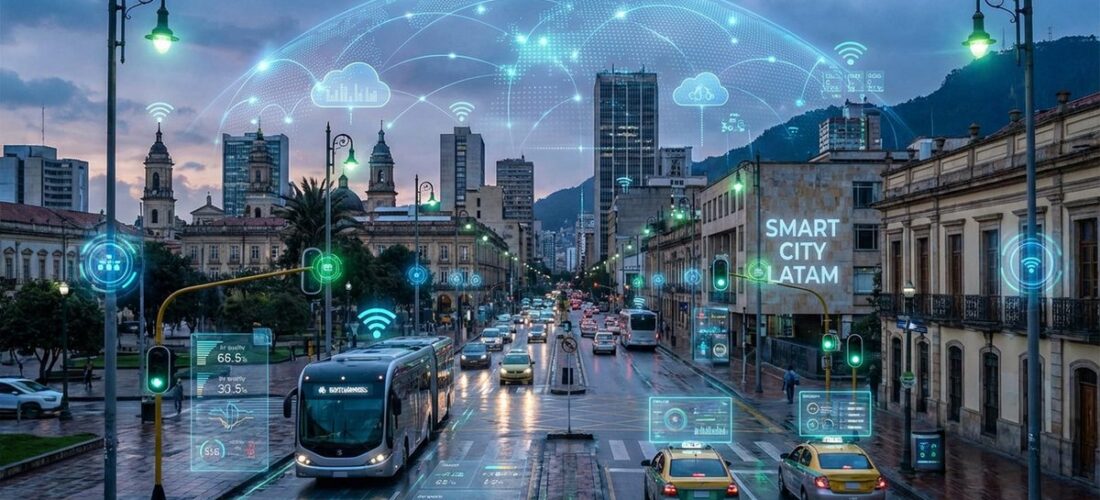
Smart City in Latin America: Introduction and Real Examples
What Is a Smart City?
A smart city leverages digital technology, data analytics, and interconnected infrastructure to improve the quality of life for its residents, enhance sustainability, and streamline urban governance. Rather than a single technology or platform, the concept encompasses a broad ecosystem of innovations — from sensor networks monitoring air quality to mobile applications enabling citizen participation in municipal decision-making.
In Latin America, the smart city movement has gained significant momentum over the past decade. Rapid urbanization, persistent inequality, and the urgent need for climate adaptation have pushed municipal governments to explore technology-driven solutions. Yet the region faces unique challenges: limited budgets, digital divides, and institutional fragmentation often complicate implementation. Understanding how Latin American cities are navigating these obstacles offers valuable lessons for urban planners worldwide.
Key Technologies Driving Urban Transformation
Smart city initiatives across the region typically rely on several foundational technologies:
- Internet of Things (IoT): Networks of sensors embedded in infrastructure — traffic lights, water pipes, waste bins — generate real-time data that enables more responsive city management.
- Open Data Platforms: Municipalities publish datasets on transportation, public safety, and environmental conditions, empowering researchers, developers, and citizens to build applications and hold governments accountable.
- Geographic Information Systems (GIS): Mapping tools allow cities to visualize urban growth, identify vulnerable neighborhoods, and plan infrastructure investments with spatial precision.
- Artificial Intelligence and Predictive Analytics: Machine learning models help forecast traffic congestion, predict flooding risks, and optimize energy distribution across urban grids.
- Digital Government Services: Online portals and mobile apps reduce bureaucratic friction, allowing residents to pay taxes, report potholes, request permits, and access public health information without visiting government offices.
- Smart Mobility Solutions: Integrated fare systems, real-time transit tracking, and bike-sharing platforms improve how people move through cities.
Medellín: From Violence to Innovation Hub
Perhaps no Latin American city better illustrates the transformative potential of smart urbanism than Medellín, Colombia. Once notorious for extreme violence, the city has reinvented itself through strategic investments in technology and social infrastructure.
The Medellín Innovation District, known as Ruta N, serves as the nerve center of the city’s technology ecosystem. Established in 2009, Ruta N has attracted hundreds of technology startups and multinational companies, generating thousands of high-skilled jobs. The district operates under a comprehensive innovation plan that integrates energy efficiency, sustainable construction, and knowledge-based economic development.
Medellín’s metro system — the only urban rail network in Colombia — was among the first in the region to implement integrated smart card payment across metro, cable car, and bus routes. The Metrocable system, which connects hillside informal settlements to the city center, has become a globally recognized model for inclusive urban mobility. Real-time passenger data helps operators adjust service frequency and plan network expansions based on actual demand patterns.
The city also pioneered the use of environmental monitoring networks, with air quality sensors deployed across the metropolitan area. Data from these sensors feeds into a public dashboard that issues health advisories during high-pollution events, particularly during the city’s biannual atmospheric inversions.
Buenos Aires: Open Data and Digital Governance
Argentina’s capital has positioned itself as a regional leader in digital governance and open data. The Buenos Aires Data Portal (data.buenosaires.gob.ar) is one of the most comprehensive municipal open data platforms in Latin America, publishing datasets on everything from Metrobus ridership statistics to tree inventories and construction permits.
The city’s 147 hotline and corresponding mobile application allow residents to report infrastructure problems, request municipal services, and track the status of their requests. The system processes millions of interactions annually, and the resulting data helps city administrators identify recurring problems and allocate maintenance resources more effectively.
Buenos Aires has also invested heavily in smart traffic management. An adaptive traffic signal system covering major corridors adjusts light timing based on real-time vehicle flow data, reducing congestion and emissions. The Metrobus bus rapid transit network, which carries over one million passengers daily, uses GPS tracking and automated passenger counting to optimize service delivery.
The BA Elige participatory budgeting platform enables residents to propose and vote on neighborhood improvement projects, with the city committing a portion of its annual budget to the winning proposals. This digital tool has significantly broadened civic participation, particularly among younger residents who engage more readily through online platforms.
Santiago de Chile: Environmental Monitoring and Smart Transport
Santiago faces acute environmental challenges, including chronic air pollution trapped by the surrounding Andes mountains and recurring water scarcity. The city has responded with several technology-driven initiatives.
The Santiago Respira air quality monitoring network provides real-time pollution data across dozens of stations throughout the metropolitan area. During critical pollution episodes, the system automatically triggers vehicle circulation restrictions and industrial emissions controls. The data is publicly accessible and has become an essential planning tool for urban development decisions.
In transportation, Santiago’s Transantiago system (now rebranded as RED) has undergone continuous technological upgrades. The integration of GPS tracking across the entire bus fleet enables a real-time transit information system that passengers can access through mobile applications. Smart fare cards collect anonymized trip data that helps transport planners understand commuting patterns and identify underserved areas.
The city has also expanded its network of Puntos Limpios — recycling centers equipped with digital tracking systems that monitor waste volumes and material types, enabling more efficient collection routes and better recycling rate measurement.
Cali: Digital Inclusion and Citizen Security
Colombia’s third-largest city has pursued a distinctive smart city strategy centered on digital inclusion and public safety. The CALI DA initiative established free public WiFi zones across underserved neighborhoods, reducing the digital divide that often limits the benefits of smart city programs to wealthier areas.
Cali’s integrated security monitoring center combines video surveillance, emergency call processing, and predictive analytics to coordinate responses across police, fire, and medical services. While surveillance technologies raise legitimate privacy concerns, the system has contributed to measurable improvements in emergency response times.
The city has also developed digital platforms for managing its extensive urban green spaces and monitoring the Cauca River’s water quality — critical functions given Cali’s tropical climate and vulnerability to flooding.
Challenges for Smart City Adoption in the Region
Despite these successes, Latin American cities face persistent obstacles in their smart city journeys:
- Digital Divide: Significant portions of the urban population lack reliable internet access or digital literacy, risking the creation of two-tier cities where smart services benefit only connected residents.
- Fiscal Constraints: Municipal budgets in the region are often insufficient for large-scale technology investments, making cities dependent on international development financing or public-private partnerships with complex governance structures.
- Data Privacy and Security: The expansion of sensor networks and surveillance systems raises concerns about citizen privacy, particularly in countries where data protection legislation remains underdeveloped.
- Institutional Fragmentation: Smart city initiatives often span multiple municipal departments with limited coordination, leading to duplicated efforts and incompatible data systems.
- Political Discontinuity: Changes in municipal government frequently disrupt ongoing technology projects, as incoming administrations may deprioritize or abandon their predecessors’ initiatives.
- Vendor Lock-in: Dependence on proprietary technology platforms can create long-term cost and flexibility problems for cities with limited technical capacity to evaluate alternatives.
Looking Forward: Toward More Inclusive Smart Cities
The most promising smart city initiatives in Latin America share a common characteristic: they place human needs at the center of technology deployment rather than pursuing innovation for its own sake. Medellín’s Metrocable was not primarily a technology project — it was a social inclusion strategy that happened to use cable car engineering. Buenos Aires’ open data platform succeeds because it empowers citizens, not because the data itself is technologically sophisticated.
As the region continues to urbanize — with projections suggesting that over 85 percent of Latin Americans will live in cities by 2030 — the smart city agenda will only grow in importance. The challenge lies in ensuring that digital transformation reduces rather than reinforces the profound inequalities that define Latin American urbanism. Cities that manage this balance will offer models not just for the region, but for the developing world as a whole.
For urban planners, researchers, and municipal officials, studying these diverse approaches provides a rich evidence base for designing context-appropriate solutions that leverage technology while remaining grounded in the social realities of Latin American cities.