Sustainable Development Goals in Peru: SDG 6, 11 and 13 Explained
Sustainable Development Goals in Peru: Progress and Challenges
Peru has committed to achieving the 17 Sustainable Development Goals (SDGs) adopted by the United Nations in 2015. Three SDGs are particularly relevant to sustainable urban development in the country: SDG 6 (Clean Water and Sanitation), SDG 11 (Sustainable Cities and Communities), and SDG 13 (Climate Action).
SDG 6: Clean Water and Sanitation
Access to clean water remains one of Peru most pressing development challenges. While coverage has improved significantly in urban areas, with approximately 94% of urban residents having access to piped water, rural areas lag behind at around 76%. Quality and continuity of service vary dramatically between regions.
Key challenges include:
- Water stress in Lima: The capital city, home to nearly one-third of Peru population, is located in a desert and depends almost entirely on Andean river systems for its water supply. Climate change is reducing glacial reserves that historically regulated seasonal water flows.
- Wastewater treatment: Only about 70% of collected wastewater receives treatment, with many treatment plants operating below capacity or with outdated technology.
- Rural access: Remote rural communities, particularly in the Amazon region, often rely on untreated surface water sources that are vulnerable to contamination.
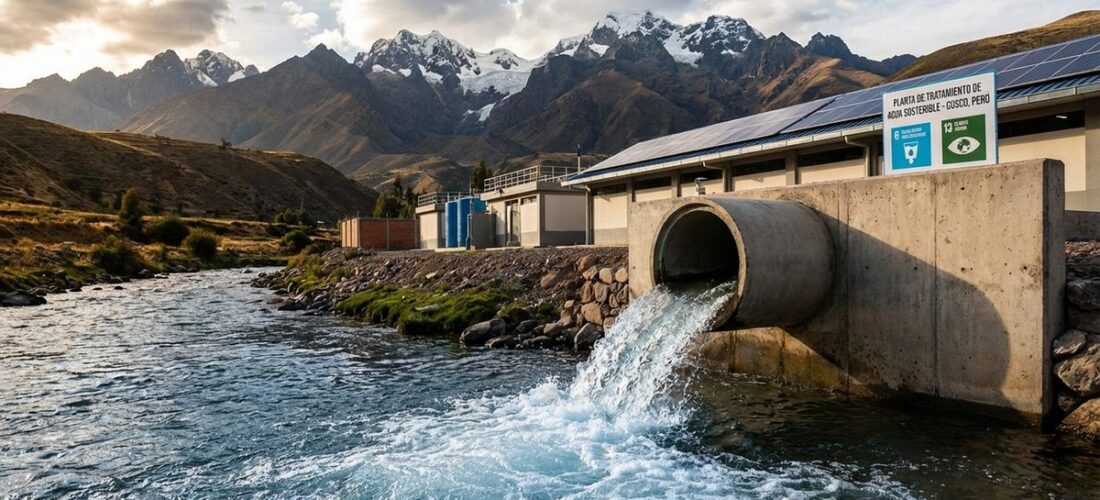
Peru has implemented several innovative programs to address these challenges, including the payment for ecosystem services schemes in the Andes, community-managed water systems in rural areas, and the modernization of Lima water utility SEDAPAL.
SDG 11: Sustainable Cities and Communities
As an increasingly urban country — approximately 79% of Peruvians live in cities — achieving SDG 11 is critical for Peru development. Key areas of progress and challenge include:
- Housing: The national housing deficit exceeds 1.8 million units. Programs like Fondo MiVivienda and Techo Propio have made significant contributions, but demand continues to outpace supply, particularly in Lima and major provincial cities.
- Transport: Lima Metro Line 1 began operations in 2012, and Line 2 is under construction. However, the vast majority of public transport still relies on informal minibus operators, resulting in congestion, pollution, and safety concerns.
- Disaster resilience: Peru high seismic risk and vulnerability to El Niño events make disaster preparedness essential. Building codes have been strengthened, but enforcement remains inconsistent.
- Cultural heritage: Peru has made progress in protecting its extraordinary cultural heritage, including pre-Columbian archaeological sites within urban areas.
SDG 13: Climate Action
Peru is one of the countries most vulnerable to climate change impacts, despite contributing relatively little to global greenhouse gas emissions. The country faces multiple climate-related risks:
- Glacial retreat: Peru tropical glaciers have lost approximately 50% of their surface area since the 1970s, threatening water supplies for millions of people and hydroelectric power generation.
- Extreme weather events: El Niño events cause severe flooding on the coast, while La Niña brings drought to southern regions. Climate change is projected to increase the intensity and frequency of these events.
- Amazon deforestation: While deforestation rates in Peru are lower than in Brazil, forest loss in the Amazon continues to be a significant source of greenhouse gas emissions.
Peru has established ambitious climate targets, including a commitment to reduce greenhouse gas emissions by 40% below projected levels by 2030. The country National Adaptation Plan focuses on water resources, agriculture, health, and infrastructure as priority sectors.
Connecting the SDGs through urban action
The interconnected nature of SDGs 6, 11, and 13 means that progress in one area often supports advancement in others. Sustainable urban water management contributes to both clean water access and climate resilience. Green infrastructure in cities simultaneously improves habitability and reduces vulnerability to climate impacts. Peru experience demonstrates both the challenges and opportunities of pursuing integrated sustainable development in a rapidly urbanizing, climate-vulnerable country.