Recycling Points in Santiago: Where to Recycle and How the Program Works
What Are Puntos Limpios?
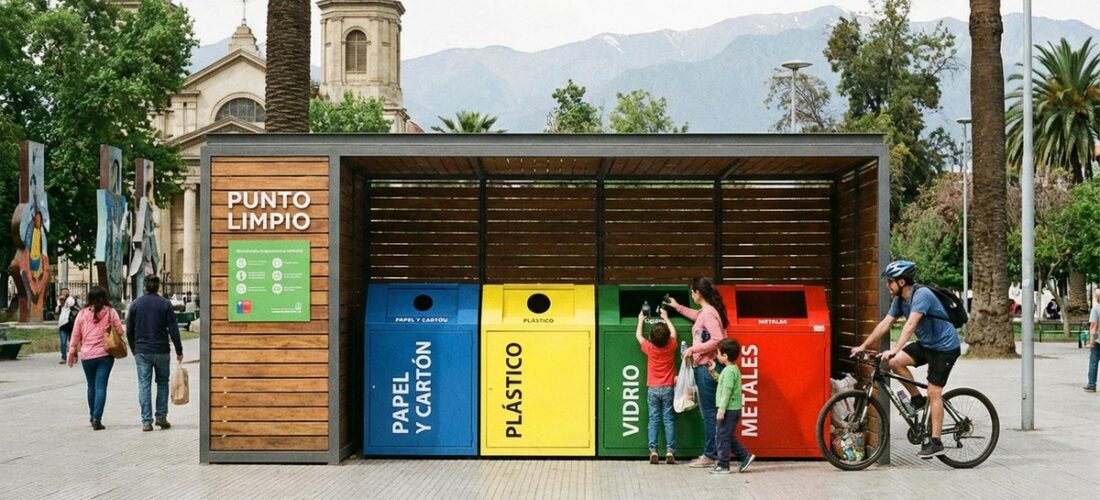
Puntos Limpios — literally “Clean Points” — are dedicated recycling and waste separation centers established across Santiago, Chile, as part of the city’s comprehensive strategy to reduce landfill dependency and promote a circular economy. These facilities serve as drop-off locations where residents can bring sorted recyclable materials free of charge, ensuring that valuable resources are diverted from the waste stream and reintegrated into productive cycles.
The program emerged from Chile’s growing recognition that traditional waste management — dominated by landfill disposal — was unsustainable for a metropolitan area of over seven million inhabitants. Santiago generates approximately 3.5 million tons of solid waste annually, and historically, recycling rates hovered below 10%. The Puntos Limpios initiative, coordinated between municipal governments and the Ministry of the Environment, represents one of the most ambitious recycling infrastructure programs in Latin America.
How the Program Works
Each Punto Limpio operates as a staffed facility where trained personnel assist residents in correctly sorting and depositing recyclable materials. Unlike curbside collection programs, Puntos Limpios offer a centralized model that ensures higher quality separation and reduces contamination of recyclable streams.
The Drop-Off Process
- Arrival and sorting: Residents bring pre-sorted materials to the facility. Staff members verify correct separation and guide users to the appropriate containers.
- Material processing: Once collected, materials are compacted, baled, or otherwise prepared for transport to recycling facilities.
- Chain of custody: Each Punto Limpio maintains records of material volumes, enabling the municipality to track recycling rates and identify areas for improvement.
- Education component: Many facilities include informational displays and host community workshops on waste reduction, composting, and responsible consumption.
Materials Accepted
Puntos Limpios typically accept a wide range of recyclable materials, though specific categories may vary by location:
- Paper and cardboard: Newspapers, magazines, office paper, cardboard boxes (flattened), egg cartons
- Plastics: PET bottles (type 1), HDPE containers (type 2), polypropylene (type 5) — clean and dry
- Glass: Bottles and jars of all colors, separated by color where possible
- Metals: Aluminum cans, tin cans, clean aluminum foil
- Tetra Pak: Juice and milk cartons (rinsed)
- Cooking oil: Used cooking oil in sealed containers — processed into biodiesel
- Electronics: Select locations accept small electronic waste (phones, cables, batteries)
- Textiles: Some Puntos Limpios accept clothing and fabrics in good condition for reuse
Materials that are not accepted include organic waste, construction debris, hazardous chemicals, medical waste, and heavily contaminated recyclables.
Locations by Comuna
Santiago’s Puntos Limpios are distributed across numerous comunas (municipalities), each managing its own facilities according to local needs and resources. The network has expanded significantly since 2016, when Chile’s Extended Producer Responsibility (REP) law created new incentives for municipal recycling infrastructure.
Key Comunas with Punto Limpio Facilities
- Vitacura: One of the earliest adopters, operating a large-scale facility that processes over 200 tons of recyclables monthly. The Vitacura Punto Limpio is often cited as a national model.
- Las Condes: Multiple collection points integrated into public parks and commercial areas, making recycling accessible during daily routines.
- Providencia: A centrally located facility complemented by a network of smaller “mini puntos limpios” — compact stations for high-frequency recyclables like glass and PET.
- Ñuñoa: Operates a community-oriented facility with regular educational programming and partnerships with local schools.
- Santiago Centro: The flagship municipal facility near the Parque O’Higgins area, serving the dense urban core where apartment dwellers have limited space for home sorting.
- La Reina: A facility emphasizing green waste composting alongside traditional recyclables.
- Peñalolén: Notable for its inclusive approach, employing former informal waste pickers as facility staff.
- Maipú: Serving one of Santiago’s most populous comunas, with extended hours to accommodate working families.
- La Florida: Multiple facilities distributed to reduce travel distances for the comuna’s 400,000+ residents.
- Renca and Cerro Navia: Newer additions demonstrating the program’s expansion into lower-income comunas, supported by national REP funding.
As of 2025, the Santiago Metropolitan Region operates over 40 Puntos Limpios, with plans to reach 52 by the end of 2026. The Ministry of the Environment maintains an updated map of all certified facilities through its platform Chile Sin Basura.
Impact on Waste Reduction
The Puntos Limpios program has delivered measurable results in Santiago’s waste management landscape. Between 2017 and 2024, the network collectively diverted an estimated 180,000 tons of recyclable materials from landfills. Key impact indicators include:
- Recycling rate increase: Comunas with established Puntos Limpios have seen household recycling rates rise from under 5% to between 12% and 18%, with top-performing comunas like Vitacura reaching 25%.
- Landfill pressure reduction: Each ton of material recycled through a Punto Limpio saves approximately 0.8 tons of CO₂ equivalent emissions compared to landfill disposal.
- Community engagement: Over 2 million individual visits to Puntos Limpios were recorded in 2024, indicating growing public participation. Surveys show that 67% of users visit at least once per month.
- Economic value: Recovered materials generate revenue that partially offsets operational costs. Aluminum and PET command the highest market prices, while glass and cardboard provide steady lower-value streams.
- Job creation: The network directly employs approximately 500 people in facility operations, with additional indirect employment in transport and processing.
Challenges Facing the Program
Despite its successes, the Puntos Limpios network faces several ongoing challenges:
- Geographic inequality: Wealthier comunas in eastern Santiago have more and better-equipped facilities, while peripheral comunas in the south and west remain underserved.
- Contamination rates: Approximately 15-20% of materials brought to Puntos Limpios are incorrectly sorted or contaminated, reducing processing efficiency.
- Operational costs: Smaller comunas struggle to fund facility operations without national subsidies, leading to reduced hours or temporary closures.
- Organic waste gap: Most Puntos Limpios do not accept organic waste, which constitutes nearly 50% of Santiago’s municipal solid waste by weight.
Expansion Plans and Future Vision
Chile’s national waste management strategy envisions a significant scaling of the Puntos Limpios model through several parallel initiatives:
REP Law Implementation
The Extended Producer Responsibility law (Ley REP), enacted in 2016 and progressively implemented since 2021, requires producers and importers to finance the collection and recycling of their products’ packaging. This legislation channels private-sector funding into municipal recycling infrastructure, including Puntos Limpios. By 2027, packaging producers must meet specific recovery targets: 50% for paper and cardboard, 45% for glass, 35% for plastics, and 55% for metals.
Mini Puntos Limpios
Recognizing that accessibility is a key barrier to participation, several comunas are deploying “mini puntos limpios” — smaller, unstaffed collection points located in metro stations, supermarket parking lots, and community centers. These compact units accept the most commonly recycled materials (PET, cans, glass) and use IoT sensors to signal when containers are full.
Integration with Organic Waste Programs
The next evolution of the model incorporates organic waste processing through community composting stations co-located with Puntos Limpios. Pilot programs in La Reina and Providencia have demonstrated that combining recycling and composting at a single site increases overall diversion rates by 30-40%.
Digital Tracking and Incentives
Several comunas are piloting digital loyalty programs where residents earn points for each visit to a Punto Limpio, redeemable for discounts at local businesses or municipal services. The apps also provide real-time information on facility hours, accepted materials, and wait times.
Santiago’s Model in Regional Context
Santiago’s Puntos Limpios have become a reference model for other Latin American cities developing recycling infrastructure. Delegations from Bogotá, Lima, Buenos Aires, and Mexico City have studied the program, and Chile’s Ministry of the Environment actively shares best practices through regional cooperation networks. The program demonstrates that investing in accessible, well-managed drop-off infrastructure — combined with regulatory frameworks like the REP law — can meaningfully shift recycling behavior at the metropolitan scale.
For a broader perspective on waste management innovation across the region, see our overview of solid waste management success stories in Latin America, which contextualizes Santiago’s approach alongside programs in Bogotá, Curitiba, and other leading cities.