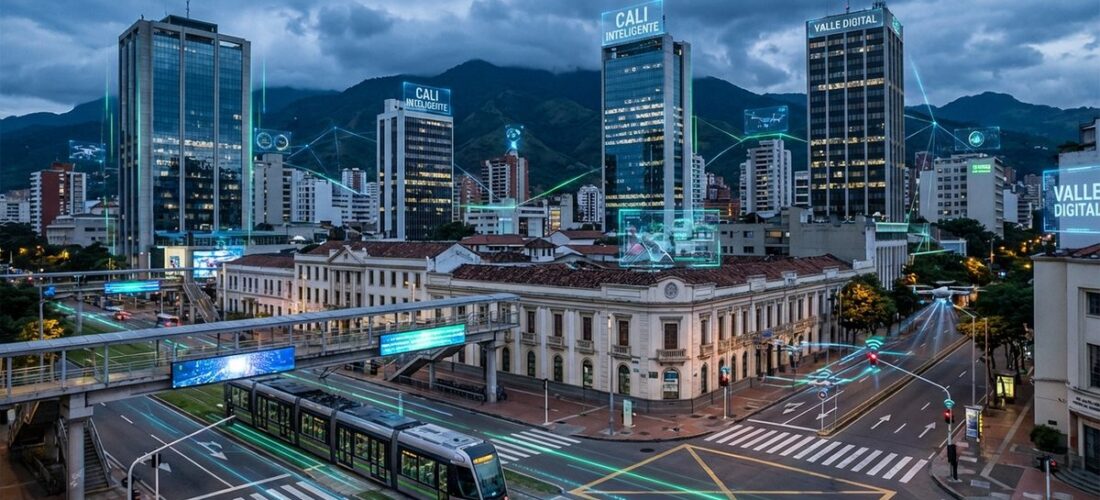
Cali Smart City: Digital Transformation of Colombia Third Largest City
Cali: Colombia’s Emerging Smart City
Santiago de Cali, commonly known simply as Cali, is Colombia’s third-largest city with a metropolitan population exceeding 2.5 million people. Located in the fertile Cauca Valley of southwestern Colombia, Cali has long been recognized for its cultural vibrancy — it is the undisputed world capital of salsa music and dance. In recent years, however, the city has gained attention for a different kind of transformation: an ambitious digital strategy aimed at modernizing urban governance, improving public services, and fostering an innovation-driven economy.
Cali’s smart city journey reflects both the possibilities and the complexities of digital transformation in a city that grapples with significant social inequalities, security challenges, and infrastructure deficits. Understanding how Cali is navigating these competing demands offers insights relevant to dozens of mid-sized Latin American cities facing similar circumstances.
The CALI DA Initiative: A Digital Foundation
The cornerstone of Cali’s digital transformation has been the CALI DA initiative, a comprehensive program aimed at expanding digital access across the city. Recognizing that smart city benefits cannot reach citizens who lack basic internet connectivity, the program prioritized the deployment of free public WiFi zones in underserved neighborhoods, community centers, and public spaces.
The initiative went beyond simple connectivity. CALI DA established digital literacy training programs targeting populations that had been historically excluded from the digital economy — including older adults, residents of low-income neighborhoods, and informal sector workers. Training centers equipped with computers and staffed by instructors offered courses in basic digital skills, online government services, and even entrepreneurship tools.
This focus on digital inclusion distinguishes Cali’s approach from many smart city programs that deploy advanced technologies without addressing the fundamental access gap. By building digital capacity from the ground up, Cali has aimed to ensure that the benefits of urban digitization extend beyond the already-connected middle and upper classes.
Smart Traffic and Urban Mobility
Traffic congestion and road safety have been persistent challenges in Cali, where rapid motorization has outpaced infrastructure development. The city’s smart mobility strategy has addressed these issues through several integrated interventions.
An intelligent traffic management system uses sensors and cameras at key intersections to monitor vehicle flow in real time. The data feeds into a central control room where operators can adjust signal timing to reduce congestion during peak hours and respond rapidly to incidents. The system has demonstrated measurable improvements in traffic flow along major corridors, reducing average commute times and associated vehicle emissions.
Cali has also invested in the MIO bus rapid transit system, which serves as the backbone of the city’s public transportation network. The MIO system incorporates GPS tracking, automated passenger counting, and a centralized dispatch system that allows operators to adjust service frequency based on demand. Digital information displays at stations provide passengers with real-time arrival information, improving the user experience and encouraging ridership.
Additionally, the city has developed a cycling infrastructure plan supported by digital tools. A bike-sharing program and dedicated cycling lanes are monitored through usage tracking systems that help planners identify the most-used routes and prioritize infrastructure investments accordingly.
Digital Inclusion and E-Government
Cali’s digital government strategy has aimed to reduce bureaucratic barriers and improve transparency in municipal services. An integrated online portal allows residents to access a range of government services — from paying property taxes and utility bills to applying for permits and registering businesses — without visiting physical government offices.
The platform has been particularly valuable for residents in peripheral neighborhoods, who previously faced long commutes to reach centrally located government buildings. By shifting routine transactions online, the city has freed up in-person service capacity for more complex matters that require face-to-face interaction.
Cali has also implemented a citizen reporting system through which residents can document infrastructure problems, report environmental violations, and request municipal services via a mobile application. The system tracks each report from submission through resolution, providing transparency and accountability in the delivery of public services. Aggregate data from citizen reports helps city administrators identify systemic problems and prioritize resources.
Security Monitoring and Public Safety
Public safety has been one of the most pressing challenges in Cali’s urban governance. The city has experienced periods of significant criminal violence, and security concerns affect residents’ quality of life, economic activity, and willingness to use public spaces.
Cali’s integrated security monitoring center — the Centro Integrado de Seguridad Ciudadana — represents one of the city’s most significant technology investments. The center consolidates video surveillance feeds, emergency call processing, and inter-agency communication into a single facility. Operators monitor real-time video from cameras deployed across the city, coordinating responses among police, fire, ambulance, and traffic authorities.
The system incorporates analytical tools that identify patterns in criminal activity, enabling more strategic deployment of security resources. Predictive models based on historical data help authorities anticipate when and where certain types of crime are most likely to occur, allowing preventive patrol strategies rather than purely reactive responses.
While these security technologies have contributed to improvements in emergency response times and crime deterrence, they also raise important questions about surveillance, privacy, and civil liberties. Cali’s experience highlights the tension that many Latin American cities face between the legitimate desire for improved public safety and the need to protect citizens’ fundamental rights in an increasingly monitored urban environment.
Innovation Ecosystem and Economic Development
Beyond government-led initiatives, Cali has cultivated a growing innovation ecosystem that contributes to the city’s smart transformation. The city hosts several technology incubators and accelerators, university research centers focused on urban technology, and a growing community of technology entrepreneurs.
The Universidad del Valle and other local institutions have established research programs in areas directly relevant to urban challenges, including water resource management, sustainable agriculture technology, and social innovation. These academic programs contribute both knowledge and trained professionals to the city’s technology ecosystem.
Cali’s strategic location — close to the Pacific port of Buenaventura and connected by major highways to Bogota, Medellin, and Ecuador — gives it logistical advantages for companies serving both domestic and international markets. The combination of a relatively lower cost of living compared to Bogota, a favorable climate, and growing digital infrastructure has made Cali an increasingly attractive destination for technology companies and remote workers.
Environmental Monitoring and Urban Resilience
Cali’s tropical climate and proximity to the Cauca River make environmental monitoring a critical function. The city has deployed sensor networks to track air quality, river water levels, and rainfall patterns, feeding data into early warning systems for flooding and other climate-related risks.
Urban green space management has also benefited from digital tools. The city maintains a digital inventory of its parks, urban forests, and green corridors, using GIS platforms to plan maintenance, track tree planting initiatives, and assess the environmental services provided by urban vegetation — including carbon sequestration, heat island mitigation, and stormwater management.
Challenges and Future Directions
Cali’s smart city journey remains a work in progress. Persistent social inequality means that the benefits of digital transformation are not evenly distributed across the city’s population. Infrastructure gaps, particularly in peripheral and informal settlements, limit the reach of technology-dependent services. And the fiscal constraints facing the municipal government impose hard choices about which investments to prioritize.
Nevertheless, Cali’s approach — with its emphasis on digital inclusion, integrated security, and practical service improvements — offers a pragmatic model for mid-sized Latin American cities pursuing smart urban development. The city demonstrates that meaningful progress is possible even without the massive budgets available to global smart city showcase projects, provided that investments are strategically targeted and responsive to citizens’ actual needs.